
There is a reason a bowl of creamy pasta, a warm slice of pizza, homemade soup, or freshly baked cookies can instantly feel more satisfying after a difficult day. Comfort food is rarely just about hunger. It is connected to memories, emotions, routines, family traditions, childhood experiences, and even the way our brains respond to certain flavors and textures.
Almost everyone has at least one meal that feels different from the rest. It might be something a parent used to prepare, a snack associated with movie nights, a traditional dish served during holidays, or a simple meal that always seems to make a bad day slightly better. But why does comfort food have such a powerful effect on us? The answer is a combination of psychology, biology, memory, and culture.
What Exactly Is Comfort Food?
- What Exactly Is Comfort Food?
- Food and Memory Are Closely Connected
- Why We Crave Familiar Foods During Stress
- The Power of Carbohydrates, Fat, and Sugar
- Temperature Makes a Difference Too
- Texture Plays a Bigger Role Than We Realize
- Every Culture Has Its Own Comfort Foods
- Family Recipes Carry More Than Ingredients
- Comfort Food Does Not Have to Be Unhealthy
- Why Cooking for Someone Else Feels So Meaningful
- New Foods Can Become Comfort Foods Too
- The Social Side of Eating
- Why Simple Meals Can Be the Most Memorable
- Final Thoughts
Comfort food is usually described as food that creates a sense of emotional satisfaction, familiarity, or nostalgia. Interestingly, there is no universal comfort food. For one person, it might be macaroni and cheese, while for another it could be chicken soup, mashed potatoes, pancakes, ramen, pizza, chocolate cake, or a traditional dish from their home country.
That is because comfort food is deeply personal. The emotional meaning attached to a meal often matters just as much as the ingredients themselves. A simple sandwich can become meaningful if someone associates it with childhood afternoons at a grandparent’s house, while a particular dessert might instantly remind someone of birthdays or family celebrations.
Food becomes part of our personal history, and when we eat those familiar dishes again, the brain does not only recognize the flavor. It can also reconnect with the memories and emotions surrounding it.
Food and Memory Are Closely Connected
Smell and taste are powerful triggers for memory, and you may have experienced this without even realizing it. A familiar smell from a kitchen can suddenly transport you back to a completely different moment in your life. The smell of cinnamon might remind someone of Christmas mornings, freshly baked bread could bring back memories of a family kitchen, and a certain type of soup might remind someone of being taken care of when they were sick.
These connections can become extremely strong because food experiences often happen during meaningful moments. Meals are part of birthdays, holidays, first dates, celebrations, family gatherings, travel experiences, and everyday routines. Over time, the brain begins to associate certain flavors and aromas with those experiences.
That means comfort food is sometimes less about the actual dish and more about what the dish represents.
Why We Crave Familiar Foods During Stress
When people feel stressed, tired, lonely, overwhelmed, or emotionally drained, familiar foods can become especially appealing. Part of the reason is predictability. During stressful situations, many things may feel uncertain or outside of our control, while a familiar meal offers the opposite experience.
You already know what it tastes like, you know how it feels, and there is no surprise involved. That familiarity can feel reassuring. Ordering your favorite pizza, cooking the same pasta recipe, or making a cup of hot chocolate can create a sense of normality when everything else feels chaotic.
Sometimes the comfort does not even come entirely from eating the food. The preparation itself can be relaxing. Chopping vegetables, stirring a sauce, baking bread, or following a familiar recipe gives your attention something simple and structured to focus on, turning cooking into a small break from everything else happening around you.
The Power of Carbohydrates, Fat, and Sugar
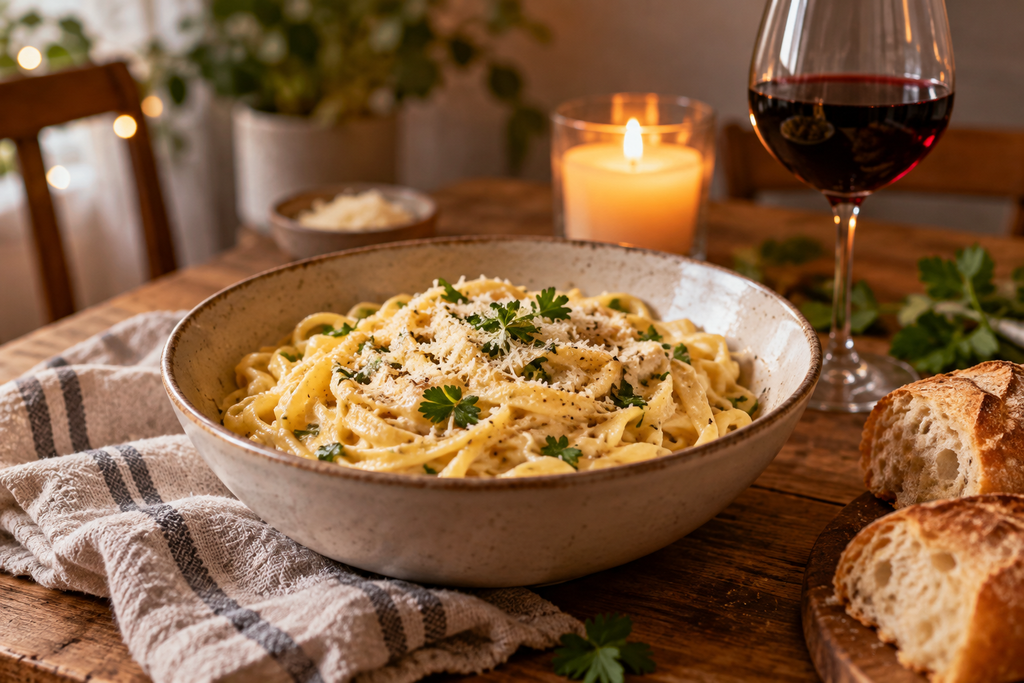
Many traditional comfort foods have something in common: they tend to contain carbohydrates, fats, or sugar. Pizza, pasta, French fries, ice cream, cake, chocolate, mashed potatoes, and mac and cheese are all common examples.
These ingredients create rich flavors and satisfying textures that many people naturally enjoy. Carbohydrates are an important source of energy for the body, while sweet flavors are naturally rewarding and can make certain foods especially appealing. Fat also contributes to richness, texture, and flavor, making a meal feel more indulgent and satisfying.
This combination can make certain foods particularly attractive when someone is tired or emotionally exhausted. However, the emotional impact of comfort food is not simply a physical reaction. Two people can eat the exact same dish and experience it completely differently because personal associations still play a major role.
Temperature Makes a Difference Too
Many comfort foods are served warm, and that may not be a coincidence. Warm food and drinks are often associated with relaxation, care, and a feeling of comfort. Think about how different a warm bowl of soup feels compared with a cold snack when you are tired or feeling unwell.
Hot chocolate, tea, soup, casseroles, baked pasta, and freshly cooked meals can create a physical feeling of warmth that reinforces emotional comfort. There is also something naturally inviting about food that has just come out of the oven or off the stove. The smell fills the room, steam rises from the plate, and the experience feels fresh and immediate.
All of these small sensory details contribute to the overall experience of eating and can make a meal feel even more comforting.
Texture Plays a Bigger Role Than We Realize
Comfort food is not only about flavor. Texture matters too. Creamy, soft, crispy, chewy, crunchy, and melted foods all create very different sensory experiences, and many comfort foods combine several textures at once.
Pizza has a soft center, melted cheese, and a slightly crispy crust. Fried chicken combines a crunchy exterior with a juicy interior, while ice cream is cold and creamy. Fresh cookies can be crisp around the edges and soft in the center.
These texture combinations keep food interesting and can make eating more satisfying. Even the sound of food can contribute to the experience, as the crunch of chips, crispy fries, or toasted bread adds another sensory layer that influences how enjoyable the food feels.
Every Culture Has Its Own Comfort Foods
Comfort food looks very different depending on where you live. In the United States, people might immediately think of mac and cheese, fried chicken, grilled cheese, or apple pie. And in Italy, pasta, risotto, or lasagna might fill that role, while in Japan, dishes such as ramen or curry rice may feel deeply familiar.
In the Balkans, comfort food might include sarma, burek, pasulj, musaka, homemade soups, or traditional baked dishes. The specific food changes, but the emotional principle remains the same: comfort food often represents home.
That is one reason people living abroad frequently begin craving foods from their home country even more strongly. A familiar dish can become a connection to language, family, traditions, and identity, and eating it can briefly make a distant place feel closer.
Family Recipes Carry More Than Ingredients
Some of the most powerful comfort foods are recipes passed down through families. These recipes often come with stories. Someone might remember watching their grandmother prepare dough without measuring anything, while another person might remember a father who had a special barbecue recipe that appeared every summer.
A particular cake may have been made for every birthday, or a certain dish may have been part of every family celebration. Over time, these foods become part of a family’s identity.
Even when recipes change slightly from generation to generation, the tradition remains. That is why handwritten recipe books, old kitchen notes, and family cooking traditions can feel surprisingly valuable. They preserve much more than cooking instructions. They preserve memories, routines, and small pieces of family history.
Comfort Food Does Not Have to Be Unhealthy
Comfort food is sometimes automatically associated with heavy meals, desserts, and fast food, but comfort can come from almost anything. For some people, it might be a fruit smoothie, while for others it could be roasted vegetables, yogurt with honey, chicken soup, rice bowls, oatmeal, or a fresh salad they ate regularly growing up.
The emotional association matters more than whether a food fits the typical image of comfort food. Even healthier meals can become deeply comforting when they are connected to positive experiences.
It is also possible to create lighter versions of traditional comfort foods without completely changing what makes them enjoyable. Someone might add more vegetables to pasta, use grilled ingredients instead of fried ones, or pair a rich main dish with a lighter side. Food does not always have to fit into strict categories of “good” and “bad.” Sometimes it is simply food that fits the moment.
Why Cooking for Someone Else Feels So Meaningful
Food has always been one of the simplest ways people show care. When someone is sick, we bring soup. When someone moves into a new home, we might bring food. Or when friends visit, we prepare snacks or dinner, and when families celebrate something important, a meal is almost always involved.
Cooking for another person requires time and attention, and even a simple dish can communicate something meaningful. It can show that someone thought about you, remembered what you like, and took the time to prepare something specifically for you.
That is probably why some meals feel more comforting when someone else prepares them. The food becomes connected to the feeling of being cared for, and sometimes, years later, the memory of that feeling becomes permanently attached to the dish.
New Foods Can Become Comfort Foods Too
Comfort foods are not always connected to childhood. We continue creating new food memories throughout our lives. A meal from your first vacation with friends can become nostalgic years later, while the restaurant you regularly visited during university might eventually remind you of that entire period of your life.
A recipe you learn in your twenties could become the dish you later prepare for your own family. Food memories continue evolving, and today’s ordinary meal can become tomorrow’s nostalgic favorite.
That is one of the most interesting things about our relationship with food. We often do not realize we are creating memories while they are happening.
The Social Side of Eating
Many of our strongest food memories involve other people. Dinner with family, late-night food with friends, birthday cake, holiday meals, summer barbecues, restaurant dates, and movie-night snacks all combine food with social experiences.
That is why eating the same food alone can sometimes feel completely different from eating it with people you care about. The meal itself might be identical, but the experience changes because conversation, laughter, music, atmosphere, and company all become part of how we remember the food.
In many cases, the people around the table matter more than what is actually on the table.
Why Simple Meals Can Be the Most Memorable
Expensive ingredients do not automatically create memorable food. Some of the meals people remember most fondly are incredibly simple, such as bread and butter, a homemade sandwich, pancakes on Sunday morning, soup on a rainy day, or popcorn during a movie.
The emotional setting can transform an ordinary meal into something special. That is also why trying to perfectly recreate a nostalgic dish can sometimes be difficult. You can follow the same recipe, use the same ingredients, and prepare it exactly the same way, yet somehow it still feels different.
Sometimes what we are really trying to recreate is not the food itself. It is the moment, the people who were there, the atmosphere, and the way we felt at the time.
Final Thoughts
Comfort food shows us that eating is about much more than nutrition. Food carries memories, creates routines, connects people, and represents cultures and traditions. Sometimes a familiar meal can provide a small sense of comfort exactly when we need it most, whether it is a homemade favorite, a traditional dish, something sweet, or simply a meal we have loved for years.
What matters most is often the story attached to the food. When we return to our favorite comfort foods, we are usually returning to more than a flavor we are reconnecting with a memory, a person, a place, or a moment that still feels familiar. And when it is time to relax after a good meal, you can add a little more entertainment to the evening by exploring the games available at Eternal Slots.
If you are also interested in learning more about casino promotions and weekly rewards, be sure to read Free Spins Promotions: Why Players Love Weekly Rewards and discover why FS promotions continue to be such a popular part of the online casino experience.

You might also like












Leave A Reply