
If disappointment burned calories, slot players would all have six-packs. That’s probably the most accurate way to describe the emotional rollercoaster of near misses in slot games. You know the moment. Two bonus symbols land perfectly, the third one slows down dramatically like it’s starring in a Hollywood action scene… and then it slips past your screen by half a pixel. Suddenly, your brain reacts as if the game personally betrayed you. You didn’t technically win, but your brain didn’t exactly process it as a loss either. And that strange emotional limbo is exactly where the psychology behind near misses in slot games becomes fascinating. It’s not just about spinning reels and flashy animations anymore. It’s about how the human brain interprets anticipation, reward, frustration, excitement, and possibility all at once. Slot developers understand this better than most people realize, and they’ve mastered the art of making “almost” feel dangerously close to “definitely next spin.”
The reason near misses in slot games feel so powerful comes down to something surprisingly human: our brains are obsessed with unfinished stories. Psychologists have studied this behavior for years, discovering that people often remember incomplete tasks more vividly than completed ones. In slot machine psychology, a near miss acts like an unfinished sentence. Your brain sees two jackpot symbols and subconsciously believes the third one was within reach, even though every spin is random. The experience creates emotional tension, and tension demands resolution. That’s why players often feel an immediate urge to spin again after almost winning. It’s less about logic and more about emotional momentum. Your brain starts whispering dangerous little thoughts like, “Okay… but what if the next one hits?” That’s the exact emotional hook casino gaming experiences are designed to create.
The Brain Treats Near Misses Like Tiny Victories
Human brains are basically golden retrievers with Wi-Fi. Throw a little excitement at them, and suddenly they’re emotionally invested in blinking lights and cartoon treasure chests. One of the wildest discoveries in gambling psychology is that near misses activate reward-related regions of the brain almost like actual wins do. Yes, seriously. Even though the player technically lost money, the brain responds with heightened activity because it interprets the event as progress instead of failure. That’s why online slot behavior often becomes emotionally intense after several near misses in a row. The player starts feeling “close,” even when mathematically nothing changed.
Researchers studying dopamine and slot games discovered that anticipation can sometimes feel even more stimulating than the reward itself. That sounds ridiculous until you remember how people act during season finales, online shopping countdowns, or waiting for someone to text back. Anticipation creates emotional electricity. Slot game mechanics are built around this principle. The slowing reels, suspenseful sound effects, flashing animations, and delayed outcomes are not random aesthetic choices. They’re carefully designed to stretch anticipation for as long as possible. The longer your brain hovers between hope and outcome, the stronger the emotional engagement becomes.
This is why slot machine design has evolved so dramatically over the years. Older machines were simple and mechanical. Modern online slots feel cinematic. They use visual storytelling, sound layering, color psychology, and reward anticipation to create immersion. Even losses are designed to feel entertaining. Some games celebrate tiny payouts with explosive animations that look like you just conquered a kingdom, even when the actual reward barely covers the spin cost. That emotional confusion is part of the online casino psychology experience. Players stop focusing only on money and start chasing feelings instead.
Why Players Keep Spinning After Near Misses
Nothing fuels confidence quite like losing while believing you’re secretly winning. That sentence perfectly explains why near misses affect player behavior in online slots so strongly. Logically, a near miss should discourage someone. After all, losing is still losing. But psychologically, near misses often increase motivation instead of reducing it. That’s because the brain interprets “almost” as evidence that success is approaching. It creates a false sense of momentum, even though slot outcomes remain completely random.
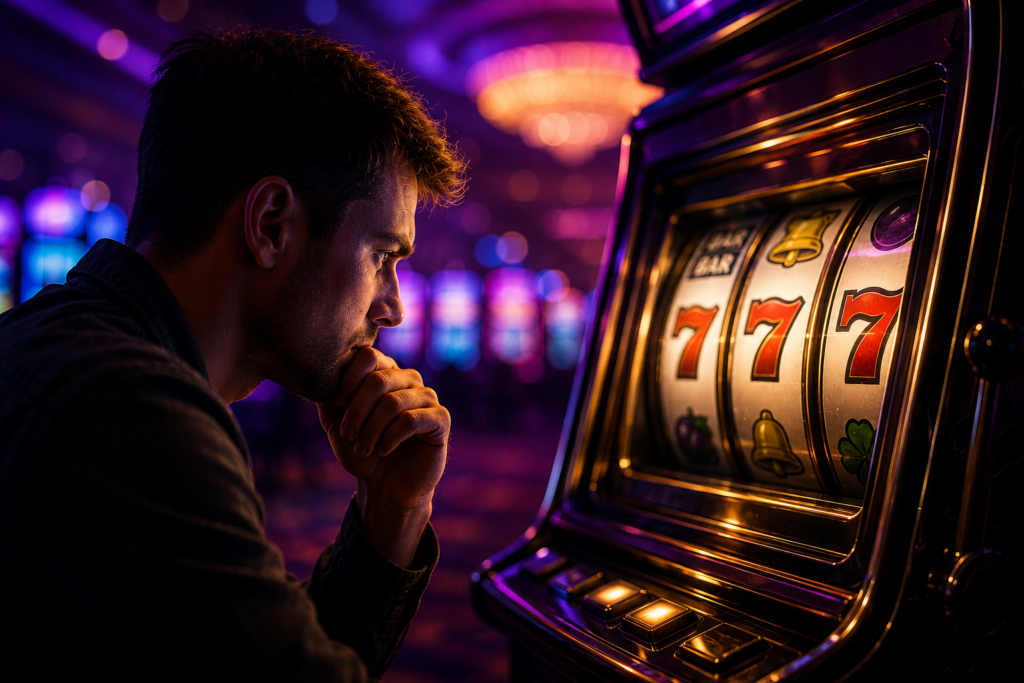
This effect becomes even stronger because humans naturally look for patterns everywhere. We do it with relationships, weather, sports, social media algorithms, and yes, slot games. Player behavior in casinos is heavily influenced by the illusion of control. When someone experiences multiple near misses, they may begin believing the machine is “warming up” or preparing for a payout. In reality, slot game mechanics operate independently on every spin through random number generators. But emotionally, the experience feels connected. That emotional illusion is what keeps many players engaged far longer than they originally planned.
The psychology behind almost winning in slot machines also taps into competitiveness. Humans hate feeling unfinished. A near miss creates emotional tension because the brain perceives the outcome as narrowly escaped success instead of total failure. Imagine throwing a basketball that spins around the rim before bouncing out. Technically you missed, but emotionally it feels different from an airball. Slot games use the same emotional principle repeatedly. The player walks away feeling close enough to continue rather than discouraged enough to stop.
The Science Behind “Almost Winning”
Science really looked at slot machines and said, ‘Yep, let’s study emotional damage professionally.’ And honestly, thank goodness they did, because the science behind near misses in casino games explains a lot about why players behave the way they do. Neuroscientists discovered that near misses activate similar neural pathways as actual wins, particularly in areas connected to reward processing and motivation. In simple terms, the brain treats “almost winning” as something emotionally meaningful instead of dismissing it as just another loss.
This reaction is deeply connected to dopamine, one of the brain’s major motivational chemicals. People often describe dopamine as the “pleasure chemical,” but that explanation is incomplete. Dopamine is more accurately linked to wanting, anticipation, and pursuit. That’s why slot games feel rewarding even without winning sometimes. The emotional excitement isn’t always tied directly to money. It’s tied to possibility. The spinning reels create uncertainty, and uncertainty is psychologically stimulating because the brain becomes hyper-focused on potential outcomes.
Casino player psychology heavily relies on this uncertainty-reward loop. If wins happened constantly, the excitement would disappear quickly. But if rewards appear unpredictable, the brain stays emotionally invested. This is called variable reinforcement, and it’s one of the strongest behavioral conditioning systems ever studied. Social media apps use it. Video games use it. Even dating apps use it. Slot machine design simply applies the same psychological principle through spinning reels and bonus mechanics.
Another fascinating aspect of online casino psychology is sensory reinforcement. Sounds, colors, vibrations, and animations all strengthen emotional responses during gameplay. Near misses become memorable partly because they’re dramatized. The reels slow dramatically. Music intensifies. Symbols hover teasingly above paylines. The game creates suspense deliberately because suspense increases emotional involvement. It transforms a random digital event into something that feels personal and emotionally charged.
Why Near Misses Feel More Emotional Than Regular Losses
A normal loss says ‘better luck next time,’ but a near miss says ‘you were THIS close, buddy.’ And that tiny emotional difference changes everything. Regular losses are easy for the brain to categorize quickly. You spin, nothing matches, life moves on. But near misses in slot games create emotional ambiguity. The brain struggles to label the outcome properly because it visually resembles success. That confusion increases emotional impact dramatically.
This is where gambling psychology becomes incredibly interesting. Humans react more strongly to narrowly missing rewards than to completely failing. Psychologists call this counterfactual thinking. Your brain instantly imagines the alternate reality where things turned out differently. “If that symbol dropped one more row…” “If the reel stopped half a second earlier…” These imagined scenarios intensify emotional involvement because the win feels believable, even though the odds were always random.
The psychological effects of slot games become stronger when players emotionally personalize outcomes. Over time, players may start attributing meaning to patterns, timing, or streaks. Some people believe certain machines are “due.” Others think changing bet sizes influences results. Rationally, most players understand random number generators determine outcomes independently. But emotionally, near misses encourage narrative thinking. Humans naturally turn randomness into stories because stories feel easier to emotionally process than probability.
This storytelling effect is one reason why online slot behavior often becomes ritualistic. Players develop routines, lucky habits, favorite games, or emotional superstitions. These behaviors create a sense of comfort and familiarity within unpredictable environments. Slot game engagement becomes less about isolated spins and more about emotional experiences built over time.
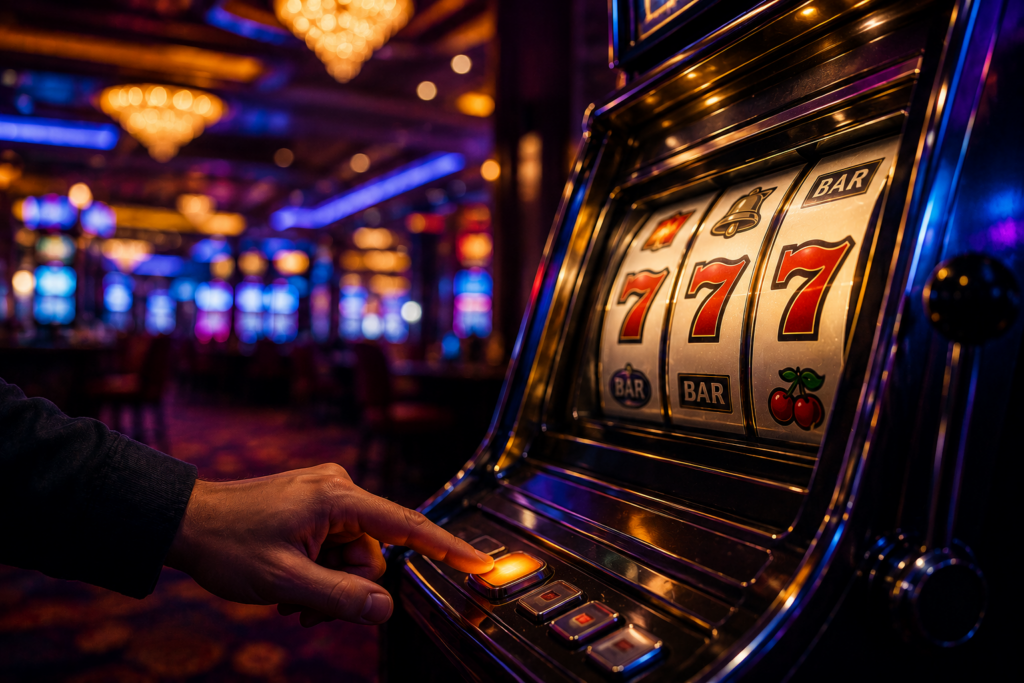
The Entertainment Factor Nobody Talks About
Modern slots are basically video games that flirt with your dopamine levels. That sounds dramatic, but honestly, it’s not far from reality. One reason why players continue spinning after near misses is because modern casino gaming experiences are designed to entertain constantly, not just reward financially. Today’s slots include storylines, animations, achievements, unlockable features, character progression, music themes, and cinematic effects. Players are no longer interacting with simple machines. They’re interacting with immersive entertainment systems.
This evolution changed how player behavior in casinos works entirely. Years ago, gambling environments focused mostly on payouts. Now, emotional engagement itself has become part of the product. Players enjoy suspense, excitement, anticipation, and visual stimulation regardless of whether every spin wins money. That’s why slot machine psychology overlaps heavily with video game psychology today. Both industries use progression systems, anticipation mechanics, and emotional reinforcement loops to maintain engagement.
The psychology behind near misses in slot games fits perfectly into this entertainment-focused design philosophy. A near miss creates drama. It creates tension. It creates emotional storytelling. And emotionally charged moments are memorable. People remember the spin that almost triggered 500 free spins far more vividly than ten ordinary losing spins combined. That memory strengthens emotional attachment to the game itself.
And honestly, humans love drama. That’s why reality TV exists. That’s why sports fans scream at televisions. And that’s why people refresh shipping updates every twelve minutes like their package contains national secrets. Emotional suspense keeps people engaged because uncertainty stimulates attention. Slot game mechanics simply apply that same principle through gameplay design.
Conclusion
At this point, the human brain deserves an apology letter from spinning reels everywhere. But honestly, that’s what makes the psychology behind near misses in slot games so fascinating. They’re not just random moments where symbols barely miss a jackpot. They’re carefully designed emotional experiences that tap directly into anticipation, excitement, frustration, curiosity, and hope all at once. Near misses create suspense, trigger dopamine responses, and convince the brain that something exciting might be just one spin away. Even when players understand the randomness behind slot machine mechanics, the emotional reaction still feels incredibly real because the brain responds emotionally before logic even gets invited into the conversation.
And let’s be honest… sometimes one dramatic near miss at 2AM feels more cinematic than half the movies on Netflix. That’s the strange magic of slot game engagement. The lights flash, the reels slow down, your heart rate suddenly starts acting like it drank three energy drinks, and for a split second you genuinely believe destiny picked your spin specifically. Ridiculous? Absolutely. Entertaining? Also absolutely.
If you want to experience the excitement, suspense, and entertainment side of modern slot games for yourself, check out Eternal Slots and explore games packed with immersive features, cinematic bonus rounds, and unforgettable near-miss moments. And if you enjoyed diving into casino psychology, don’t miss the blog Casino Games That Feel Like Main Character Energy because honestly, some slot games really do make you feel like the universe handed you your own movie soundtrack for a few spins.
Now we wanna hear from you
What’s the craziest near miss you’ve ever had in a slot game the kind that made you instantly spin again because it felt too close to ignore?

You might also like










Leave A Reply