
Ever wondered why some slot games feature 10 or 20 paylines while others advertise 243, 1,024, or even thousands of ways to win? At first glance, those bigger numbers might seem to promise more chances of hitting a winning combination. But there’s more to the story. Understanding slot paylines vs ways to win can change how you look at slot games. Both systems determine which symbol combinations qualify for payouts, but they follow different rules. And surprisingly, having more ways to win doesn’t necessarily mean a game offers better payouts.
Let’s break down how each system works, what those numbers actually mean, and what you should know before choosing your next slot.
What Are Paylines in Slots?
- What Are Paylines in Slots?
- What Does Ways to Win Mean in Slots?
- What Does 243 Ways to Win Mean?
- Beyond 243: How Do 1,024 Ways and Megaways Work?
- Slot Paylines vs Ways to Win: Key Differences
- Do More Paylines or Ways to Win Mean Bigger Payouts?
- Are Paylines and Ways to Win the Only Slot Payout Systems?
- How to Check a Slot's Paylines or Ways to Win
- Explore Different Slot Styles at Eternal Slots
- Final Thoughts: Which Slot System Should You Choose?
Understanding how paylines affect your total bet is also useful when planning your playing sessions. For more practical advice on managing your time and budget, check out our guide to online slots tips and a simple weekly play plan.
A payline is a predetermined pattern across the reels that determines where matching symbols must land to form a winning combination.
In classic three-reel slots, the rules were relatively simple. A single horizontal line across the middle of the reels was often all you needed to watch.
Modern video slots, however, can feature multiple paylines running horizontally, diagonally, or in zigzag patterns.
For example, a five-reel slot might offer:
- 10 paylines: Ten predefined patterns where winning combinations can form.
- 20 paylines: Twenty different patterns across the reels.
- 50 paylines: Fifty possible winning lines, depending on the game’s design.
Suppose you’re playing a 20-payline slot and three matching symbols appear across the first three reels. Whether those symbols create a payout depends on their positions and whether they follow one of the game’s active paylines.
If the symbols don’t land along a qualifying payline, they generally won’t create a standard line win, even if you can see three matching symbols on the screen.
Fixed vs. Adjustable Paylines
Not every slot treats paylines the same way.
Fixed paylines are always active during gameplay. You cannot reduce the number of lines, although you may be able to change your total bet.
Adjustable paylines allow you to select how many lines you want to activate. Depending on the game’s betting structure, activating more paylines may increase the total cost of a spin.
Most importantly, a payline doesn’t guarantee a payout. It simply defines one of the patterns on which qualifying symbols can form a winning combination.
What Does Ways to Win Mean in Slots?
Now imagine playing a slot where matching symbols don’t need to follow specific lines.
That’s the basic idea behind ways to win slots.
Instead of checking predetermined paylines, these games generally award wins when matching symbols appear on consecutive reels, typically starting from the leftmost reel, regardless of their vertical positions.
Here’s a simple example.
Imagine three matching diamond symbols appearing in the following positions:
- Reel 1: Top row
- Reel 2: Bottom row
- Reel 3: Middle row
In a traditional payline slot, this combination would only qualify if those positions followed an active payline.
In a standard ways-to-win slot, the combination could count as a win because the matching symbols appear on three consecutive reels.
Of course, the exact payout depends on the game’s paytable and rules.
This system allows symbols in different row positions to contribute to the same winning combination without following a fixed line.
Why Are Ways to Win Slots Popular?
One appealing feature of ways-to-win games is that players don’t have to follow dozens of individual lines to understand where a win came from.
Instead, the game checks matching symbols across adjacent reels.
Some ways-to-win slots also allow multiple winning combinations involving the same symbol during a single spin.
For example, if two matching symbols appear on the first reel and additional matching symbols appear on subsequent reels, several combinations may qualify for payouts.
However, more possible combinations don’t automatically translate into a higher return or more profitable gameplay.
What Does 243 Ways to Win Mean?
If you’ve explored online slots, you’ve probably encountered the term 243 ways to win.
Despite how impressive it sounds, the number comes from a straightforward mathematical calculation.
Imagine a slot with five reels and three visible symbol positions on each reel.
To determine the total number of possible full-length position combinations, multiply the number of positions on every reel:
3 × 3 × 3 × 3 × 3 = 243
That’s where the 243 ways come from.
Unlike a traditional 243-payline system, these aren’t 243 individually drawn lines. They represent the possible combinations of symbol positions across the five reels.
For a standard ways-to-win game, matching symbols typically need to appear on consecutive reels, beginning with the first reel, to produce a payout.
Can One Spin Produce Multiple Winning Ways?
Absolutely.
Imagine a 243-ways slot where the same symbol appears:
- Twice on reel 1
- Once on reel 2
- Twice on reel 3
Assuming three consecutive matching reels qualify for a payout, those symbols can form:
2 × 1 × 2 = 4 winning combinations
That means a single spin can produce four ways involving the same symbol.
The amount paid for each combination depends on the game’s specific rules and paytable.
It’s also important to remember that 243 ways to win doesn’t mean 243 guaranteed wins, nor does it indicate the probability of winning on any individual spin.

Beyond 243: How Do 1,024 Ways and Megaways Work?
Modern slot developers have expanded the ways-to-win concept by introducing larger reel layouts and different symbol configurations.
For instance:
- 1,024 ways to win: A five-reel game with four visible positions per reel (4 × 4 × 4 × 4 × 4).
- 4,096 ways to win: A six-reel game with four positions per reel (4 × 4 × 4 × 4 × 4 × 4).
- 117,649 ways to win: The maximum possible ways in certain six-reel Megaways configurations with seven positions per reel.
Megaways slots take the concept further by allowing the number of visible symbols on the reels to change between spins.
As a result, the number of available ways can vary throughout gameplay.
A larger number of ways may create a different visual experience, but the game’s payout structure, return to player, and volatility remain essential factors in understanding its overall behavior.
Slot Paylines vs Ways to Win: Key Differences
So, how do paylines vs ways to win compare in practice?
The biggest distinction comes down to how the game identifies winning combinations.
1. Winning Patterns
In payline slots, matching symbols generally need to follow one of the game’s predefined active lines.
In ways-to-win slots, symbols can occupy different vertical positions, provided they satisfy the game’s consecutive-reel requirements.
2. Number of Winning Combinations
Traditional slot games might feature 10, 20, or 50 paylines.
Ways-to-win games can offer hundreds or thousands of possible symbol-position combinations, depending on their reel layouts.
However, these numbers describe different payout structures and shouldn’t be treated as directly comparable measurements of winning probability.
3. Betting Structure
Some adjustable-payline slots allow players to choose the number of active lines, which may affect the total cost per spin.
Ways-to-win slots generally evaluate all available ways with each spin, although the total bet can usually be adjusted.
Always check the displayed total stake before playing.
4. Gameplay Experience
Payline slots often appeal to players who enjoy recognizable winning patterns and straightforward layouts.
Ways-to-win games offer more flexibility in symbol positioning and may create multiple combinations involving the same matching symbols.
Neither system is inherently better. The experience depends on the individual game’s design and your personal preferences.
Do More Paylines or Ways to Win Mean Bigger Payouts?
This is one of the biggest misconceptions about online slots.
More paylines or ways to win do not automatically mean bigger payouts, better odds, or a higher RTP.
A game offering 1,024 ways to win isn’t necessarily more generous than one featuring 20 paylines.
Why?
Because the number of possible winning patterns is only one part of a slot’s mathematical design.
Several other factors influence the game:
Return to Player (RTP)
RTP represents the theoretical percentage of total wagers that a slot is designed to return to players over a very large number of spins.
For example, a slot with a theoretical RTP of 96% is designed to return an average of $96 for every $100 wagered across extensive play.
That doesn’t mean an individual player will receive $96 back after wagering $100. Actual results can vary significantly.
Volatility
Volatility describes how a slot distributes its payouts.
Lower-volatility slots generally feature smaller, more frequent wins, while higher-volatility games tend to produce less frequent payouts with greater potential variation in size.
The number of paylines or ways alone doesn’t determine volatility.
Hit Frequency
Hit frequency indicates how often a game produces a winning outcome.
A game may feature thousands of ways to win but still have a relatively low hit frequency, depending on its underlying design.
The takeaway? Don’t judge a slot solely by the number displayed next to “paylines” or “ways to win.” Check the paytable, RTP information, volatility, and betting rules to get a more complete picture.
Are Paylines and Ways to Win the Only Slot Payout Systems?
Not quite.
As slot games have evolved, developers have introduced alternative ways to calculate winning combinations.
One popular example is the cluster pays mechanic.
Instead of following paylines or connecting matching symbols across consecutive reels, cluster pays games generally award wins when a required number of identical symbols form a connected group.
These symbols are typically evaluated based on their positions next to one another, according to the game’s specific rules.
Some modern slots also feature scatter-pay systems, where wins can be based on matching symbols appearing anywhere on the grid.
These mechanics demonstrate just how much slot design has evolved beyond traditional paylines.
How to Check a Slot’s Paylines or Ways to Win
Before spinning the reels, take a moment to open the game’s information or paytable section.
Most online slots provide details about how their winning combinations work. If you’re unfamiliar with some of the terminology, our guide to 15 essential slot terms every player should know can help you get familiar with the basics.
Here’s what to look for:
- Reel layout: Check how many reels and symbol positions the game uses.
- Payout system: Find out whether the game features fixed paylines, adjustable paylines, ways to win, or another mechanic.
- Winning requirements: See how many matching symbols are needed and whether combinations must begin on a particular reel.
- Bet settings: Confirm the total cost per spin and how the stake affects payouts.
- Special symbols: Review the rules for wilds, scatters, multipliers, and other features.
Understanding these details helps you recognize how the game evaluates your spins instead of relying on assumptions based on the number of paylines or ways displayed.
Explore Different Slot Styles at Eternal Slots
One of the interesting things about online slots is how differently games can be designed, even when they share similar themes or reel layouts.
At Eternal Slots, you can explore games with a variety of winning mechanics and bonus features.
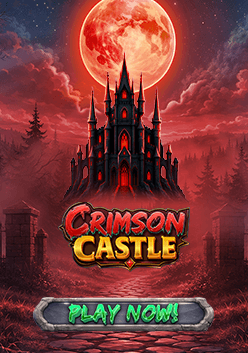
For example, Crimson Castle uses a traditional 10-line structure, along with features such as Golden Coins, a Collector Moon, and Hold & Spin.
It’s a good example of how a slot doesn’t need hundreds of ways to win to offer multiple gameplay features.
When browsing the game collection, check each title’s paytable to understand its particular winning system.
Whether you prefer clearly defined paylines or the flexible symbol arrangements found in ways-to-win slots, understanding the mechanics makes it easier to choose games that suit your preferences.
Final Thoughts: Which Slot System Should You Choose?
When comparing slot paylines vs ways to win, remember that neither system guarantees more frequent wins or bigger payouts.
Traditional paylines use predetermined patterns, while ways-to-win games allow qualifying matching symbols to connect across reels without following fixed lines.
Both offer different approaches to gameplay, and both can include exciting features, creative themes, and complex bonus mechanics.
Ultimately, understanding how winning combinations are calculated is more useful than choosing a game based on the biggest number of ways advertised.
The next time you explore a new slot, take a look at its paytable. A little knowledge about how the reels work can help you better understand the game you’re playing.

You might also like











Leave A Reply