
Funny thing is, Michael Jordan retired more times than most people change gym memberships, and yet his mindset is still cooking today’s NBA stars like it’s a Sunday family BBQ. We’re living in an era of elite athletes, insane training facilities, personal chefs, sleep coaches, and data analysts who know more about a player’s hamstring than the player does. And still when the conversation turns to mental dominance, the Michael Jordan mindset casually walks into the room, sits down, and reminds everyone who’s still in charge.
Here’s the uncomfortable truth nobody likes to admit out loud: modern stars are more skilled, more protected, and more supported than ever but mentally, many of them wouldn’t survive one season inside Jordan’s head. This isn’t nostalgia talking. This is about the Michael Jordan mentality, a psychological blueprint that didn’t just create championships, but created fear, obsession, and an almost unhealthy relationship with winning. And that’s exactly why it still outperforms today’s polished, media-trained superstars.
Winning wasn’t the goal it was the baseline
Let’s be honest, most players today want to win… but Jordan needed to win, the same way people need oxygen or Wi-Fi. For him, winning wasn’t the dream it was the minimum acceptable outcome. Anything less felt like a personal insult to his existence. That’s the core of the Michael Jordan obsession with winning, and it’s what separates him from most modern NBA stars who talk about “growth,” “journey,” and “trusting the process.”
Jordan didn’t trust the process he was the process. Losing didn’t motivate him politely. It offended him. It haunted him. It followed him home, sat on the couch, and stared at him until he did something violent on the court the next night. This level of internal pressure is why people still ask what made Michael Jordan great, even decades later. Talent opens doors. Obsession kicks them down.
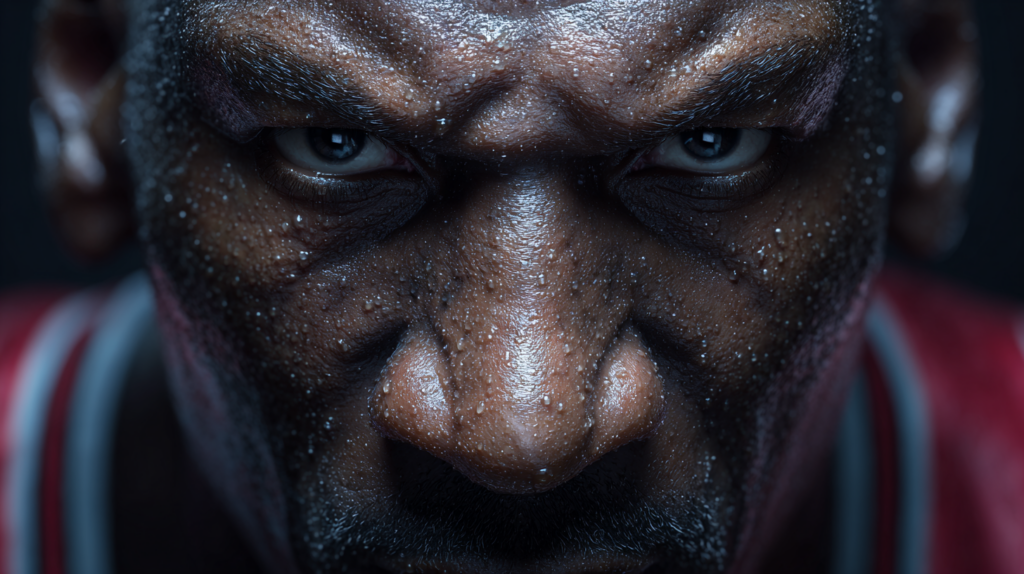
Confidence today is loud Jordan’s was terrifyingly quiet
These days confidence shows up with Instagram captions and emoji muscles, but Jordan’s confidence showed up like a cold stare that said, “I already beat you in my head yesterday.” Modern stars often need validation fans, analysts, likes, respect. Jordan needed none of that. His belief wasn’t performative; it was internal, brutal, and absolute.
The Michael Jordan competitive mindset explained in simple terms looks like this: he didn’t play to prove himself to the world he played to confirm what he already knew. That’s a massive mental difference. While many modern NBA players crumble under criticism or get distracted by narratives, Jordan weaponized doubt. Trash talk, boos, disrespect all of it was fuel. That’s why in any serious Michael Jordan vs modern NBA stars debate, the conversation always circles back to mentality. Because mentally, he was never playing the same game.
Work ethic that bordered on obsession
People love to talk about “hard work,” but Jordan turned it into a lifestyle choice, not a phase. The Michael Jordan work ethic wasn’t about motivation quotes or early morning selfies it was about doing the boring, painful, repetitive stuff when nobody was watching and nobody cared. While others trained to be great, Jordan trained to be unavoidable.
He practiced like someone was trying to take everything from him. He lifted like someone insulted his family. He showed up every day with the same intensity whether it was Game 7 of the Finals or a random Tuesday practice. This consistency is a major reason why Michael Jordan is still the mental GOAT. Modern athletes train smart Jordan trained relentless. There’s a difference, and it shows when pressure hits.
He created enemies where none existed
Jordan didn’t need rivals he invented them, and that alone should tell you everything about his mentality. Someone smiled wrong? Rival. Someone got drafted ahead of him? Enemy. Someone scored too easily in practice? Congratulations, you just ruined your next week. This self-created conflict fueled his edge and sharpened his focus beyond normal human limits.
This is a huge contrast in the mindset differences between Michael Jordan and modern stars. Today, players collaborate, support each other publicly, and form super-teams. Jordan took things personally everything. That emotional intensity, when controlled, becomes a superpower. When people ask how Michael Jordan built a championship mindset, this is a big piece of the answer: he never needed external pressure because he manufactured it internally.
Leadership through fear… and respect
Leadership seminars today will tell you to be empathetic, calm, and supportive, but Jordan’s leadership style was more like: “Meet my standards or get out of my way.” The Michael Jordan leadership style wasn’t soft, but it was effective. He demanded excellence because he lived it. He didn’t ask teammates to do anything he wasn’t willing to do harder, longer, and more intensely.
Was he tough? Absolutely. Was he sometimes unbearable? Without question. But championships don’t care about comfort. His leadership forged mental toughness, accountability, and resilience. That’s why Michael Jordan leadership and mental toughness are still studied today, even in business and psychology circles. He didn’t lead with words he led with expectations and consequences.
Modern stars are protected Jordan was exposed
Today’s NBA players are wrapped in layers of protection, from load management to public relations teams that sanitize every mistake. Jordan played in an era where failure wasn’t explained away it was punished, remembered, and replayed. There were no excuses, no safety nets, no “mental health days” mid-season. You showed up, or you got exposed.
This is a critical point in why Michael Jordan mindset still outperforms modern stars. Pressure doesn’t build character it reveals it. Jordan lived in pressure and learned to breathe there. Many modern stars, despite incredible skill, haven’t been forced to confront that level of sustained mental warfare. And when the moment gets heavy, that difference becomes visible.
The success habits nobody wants to copy
Everyone wants Jordan’s trophies, but nobody wants Jordan’s habits, and that’s the funniest part. The Michael Jordan success habits included obsession, emotional intensity, unhealthy competitiveness, and an inability to turn it off. That doesn’t sound sexy in a podcast, but it wins championships.
When people ask what athletes can learn from Michael Jordan mindset, the answer isn’t “be nice to yourself” or “find balance.” It’s learning how to demand more from yourself than anyone else ever will. That’s uncomfortable. That’s lonely. And that’s exactly why so few people ever do it.
And here’s the fun part that same competitive itch doesn’t disappear when the game ends. If you’re the type who loves testing your instincts, taking calculated risks, and chasing that adrenaline rush, you’ll feel right at home playing on Eternal Slots, where winning is about mindset just as much as luck. Because whether it’s the NBA Finals or a high-stakes spin, the mentality behind the move still matters.
If this whole “mental edge beats raw talent” idea hits home, you should also check out our blog Why Sidney Crosby Is the Definition of Consistency another deep dive into what long-term greatness really looks like when discipline shows up every single day. Different sport, same truth: mindset always shows up on the scoreboard.
Think Jordan’s mindset would still dominate today’s NBA… or do modern stars have it easier mentally?
Drop your take in the comments we want to know who you think truly has the edge when pressure hits

You might also like












Leave A Reply