
Ever found yourself emotionally invested in a celebrity breakup like it was your own? Be honest you probably said, “I knew they wouldn’t last,” while holding a tub of ice cream like a seasoned therapist. Welcome to the fascinating world of celebrity obsession psychology, where the line between admiration and emotional attachment is blurrier than a paparazzi photo taken at midnight.
We live in an era where fame feels like oxygen. Everyone’s inhaling it through reels, red carpets, and reality shows that make us feel like we personally know every Kardashian’s mood swings. This isn’t just gossip or entertainment; it’s a full-blown social phenomenon. Psychologists call it celebrity worship syndrome that intense, sometimes hilarious devotion to people who don’t know we exist but still manage to occupy 80% of our mental real estate.
When Your Brain Thinks Beyoncé Is Your Best Friend
- When Your Brain Thinks Beyoncé Is Your Best Friend
- Why We Care More About Celebrity Breakups Than Our Own
- How Social Media Turned Everyone Into a Fan With a PhD in Stalking
- The Science Behind Why Fame Is Like a Drug For Both Sides
- Celebrity Worship Syndrome: When Admiration Becomes Religion
- Why We Idolize Celebrities Like Modern Greek Gods
- The Impact of Celebrity Culture on Young People’s Mental Health
- Why We Develop Emotional Attachments to People We’ll Never Meet
- Conclusion: We’re All Just Stars in Someone Else’s Story
- Now tell me in the comments
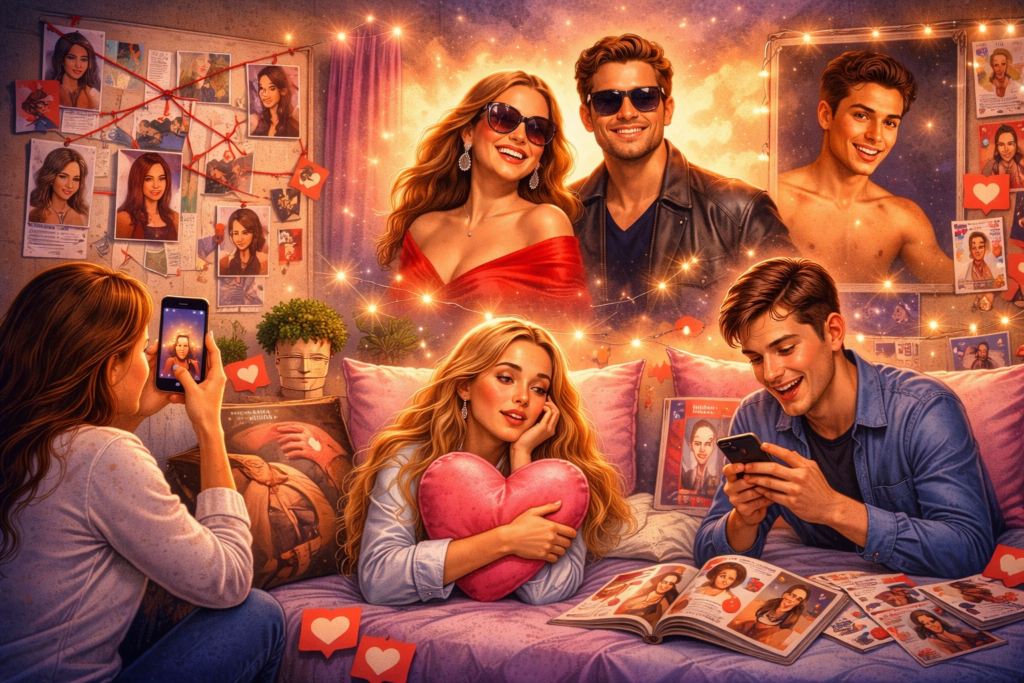
They say “never meet your heroes,” but honestly, many of us never need to we already know what they had for breakfast, who they’re dating, and how their dog looks in a Gucci harness. Welcome to the world of celebrity obsession psychology, where your brain forgets the difference between admiration and actual friendship. Psychologists call this a parasocial relationship a one-sided emotional bond we form with famous people who don’t even know we exist. And yet, here we are, defending Taylor Swift on Twitter like she’s our sister and crying when Chris Evans gets married.
This kind of attachment is perfectly normal in moderation. It scratches the same social itch as real relationships without the messy parts like emotional baggage or awkward small talk. But when admiration turns into fixation, things start dipping into celebrity worship syndrome territory. Yep, it’s a real psychological condition where your sense of identity, self-worth, and happiness start orbiting around your favorite star like paparazzi at the Oscars.
Why We Care More About Celebrity Breakups Than Our Own
Ever spent two hours reading about a celebrity divorce when your own texts are still left on read? That’s not your fault it’s media influence on behavior working its magic. Our brains are wired to respond to stories, especially dramatic ones, and the entertainment industry knows it. When we see fame and failure played out in public, it activates our emotional empathy circuits. We feel for them, even though logically we know we shouldn’t.
Psychologists say this constant exposure creates a parasocial relationship that feels authentic because celebrities share so much of their private life online. It’s like being invited into someone’s diary, only this diary has brand deals and filters. This is how modern media fuels the psychology behind why people are obsessed with celebrities it’s not just about liking them, it’s about emotionally living through them.
How Social Media Turned Everyone Into a Fan With a PhD in Stalking
Once upon a time, celebrity obsession meant buying magazines and watching interviews. Now, we have social media and celebrity influence shaping our daily emotions in real-time. You can comment on Ariana Grande’s post at 2 a.m. and feel seen because she liked a fan’s comment in 2019. Suddenly, your phone becomes a gateway into their world and the dopamine rush of that tiny connection is addictive.
Psychologists studying how social media fuels modern celebrity obsession say the accessibility creates an illusion of intimacy. We see celebrities cooking, crying, or wearing sweatpants, and it tricks our brain into thinking, “Oh, they’re just like me!” Spoiler alert: they’re not their pajamas cost more than our rent. But the illusion makes the emotional attachment even stronger, blurring the line between admiration and obsession.
The Science Behind Why Fame Is Like a Drug For Both Sides
Here’s a wild fact: psychologists say fame affects the brain the same way addiction does. The psychological effects of fame trigger dopamine surges every time a celebrity gets attention just like social media likes do for regular people. But here’s the twist: we’re addicted too, just from watching them. Fame is a two-way mirror they crave being seen, and we crave seeing them.
Researchers exploring the science behind fame addiction and public fascination have found that we project our own desires onto celebrities. They become living symbols of what we want success, beauty, freedom, validation. So when we obsess over them, we’re really just trying to understand ourselves. It’s a weird, sparkly therapy session with zero progress and unlimited reruns.
Celebrity Worship Syndrome: When Admiration Becomes Religion
If you’ve ever canceled plans because your favorite celebrity was doing a live Q&A, congratulations you’ve flirted with celebrity worship syndrome. It’s not officially a religion, but it has all the symptoms: devotion, rituals (streaming albums, watching interviews, defending them online), and even moral codes (“she could never do that, she’s perfect!”).
Psychologists who study celebrity worship syndrome explained by psychologists say it often stems from low self-esteem and a desire for belonging. In other words, it’s easier to find comfort in someone else’s fame than to confront our own insecurities. Celebrities become emotional anchors stable, glamorous constants in a chaotic world. And let’s be honest, who wouldn’t want a little sparkle to distract from daily stress?
Why We Idolize Celebrities Like Modern Greek Gods
Ancient civilizations worshipped gods who controlled thunder, war, and love. Today, we worship people who control Instagram engagement, Met Gala looks, and red carpet interviews. Psychologists say the psychological reasons why we idolize celebrities come from our innate human need for role models. They embody exaggerated versions of traits we aspire to confidence, success, beauty all wrapped in designer clothing.
But it’s not all shallow. This idolization can also motivate us to improve ourselves. Watching an athlete train relentlessly or an artist overcome challenges can inspire our own growth. The trick is to admire without absorbing to see them as symbols, not saviors. Because once admiration turns into obsession, we lose touch with reality faster than a celebrity loses their privacy.
The Impact of Celebrity Culture on Young People’s Mental Health
If you’ve ever caught a teenager crying because their favorite influencer didn’t reply, you’ve witnessed the impact of celebrity culture on young people’s mental health. Social media has turned comparison into a full-time sport, and the scoreboard is self-esteem. Seeing “perfect” lives online creates unrealistic standards that affect body image, happiness, and self-worth.
This is where fame and mental health collide not just for celebrities, but for fans too. Young people grow up believing validation equals value. They see influencers monetizing authenticity, and suddenly, being “real” becomes another performance. Psychologists warn that constant exposure to curated perfection can lead to anxiety, depression, and distorted self-image. It’s not just a highlight reel anymore; it’s a psychological minefield.
Why We Develop Emotional Attachments to People We’ll Never Meet
Let’s face it your brain doesn’t care if the person you admire lives in Hollywood or your neighborhood. It processes emotional connections the same way. That’s why we develop emotional attachments to celebrities so easily. We see their stories, feel their emotions, and mirror their experiences through empathy. It’s the same neural wiring that makes us cry during movies or cheer for reality show contestants we’ve never met.
These parasocial relationships with famous people fill social gaps. They provide comfort, consistency, and even inspiration. But when that connection starts replacing real relationships, it’s like living in a social hologram you feel connected but remain isolated. And yet, it’s so easy to stay hooked because, unlike real people, celebrities never ghost you (well, unless they deactivate their account).
Conclusion: We’re All Just Stars in Someone Else’s Story
They say curiosity killed the cat, but let’s be real it was probably scrolling through a celebrity’s vacation pics at 3 a.m. that did it. Our fascination with fame isn’t just gossip; it’s a mirror reflecting what we crave most connection, validation, and a little sparkle to break the daily routine. The truth is, the psychology behind celebrity obsession says more about us than it does about them.
Celebrities give us something to root for, escape into, and even laugh at when life feels dull. Parasocial relationships aren’t inherently bad they can inspire us, comfort us, or make us dream bigger. But when admiration turns into obsession, we risk losing touch with our own reality, swapping personal goals for paparazzi highlights. Like every good relationship (even a one-sided one), balance is key.
So yes, keep cheering for your icons, enjoy the movies, the music, the drama just don’t forget the star of your own story: you. And if you’re in the mood for a little stardom of your own, play like a celebrity and chase your spotlight at Eternal Slots where every spin could be your red-carpet moment. Before you go, check out our latest read, Dancing with the Stars: What Makes It a Timeless TV Sensation it’s a perfect encore if you’re still fascinated by fame, rhythm, and glittery competition.
Now tell me in the comments
Which celebrity has you wrapped around their Instagram feed, and what do you think that says about you?

You might also like










Leave A Reply